Congratulations SRBWI on Joint UN Submissions on the Elimination of Racial Discrimination

Wilcox County – Human Rights Commission held its First Field Day at the Community Garden on April19th and completed the planting of the garden on April 20th. The students from the agricultural program at the local High School were on hand, as well as community members and leaders. We are excited about the progress the HRC is making in Wilcox County. Thank you for your support and devotion to the community.
Congratulations SRBWI on Joint UN Submissions on the Elimination of Racial Discrimination Read More »

Wilcox County – Human Rights Commission held its First Field Day at the Community Garden on April19th and completed the planting of the garden on April 20th.

Wilcox County – Human Rights Commission held its First Field Day at the Community Garden on April19th and completed the planting of the garden on April 20th. The students from the agricultural program at the local High School were on hand, as well as community members and leaders. We are excited about the progress the HRC is making in Wilcox County. Thank you for your support and devotion to the community.

Wilcox County – Human Rights Commission held its First Field Day at the Community Garden on April19th and completed the planting of the garden on April 20th. Read More »

SRBWI Board Member and Author Sophia Bracy Harris recounts segregation at Alabama High School

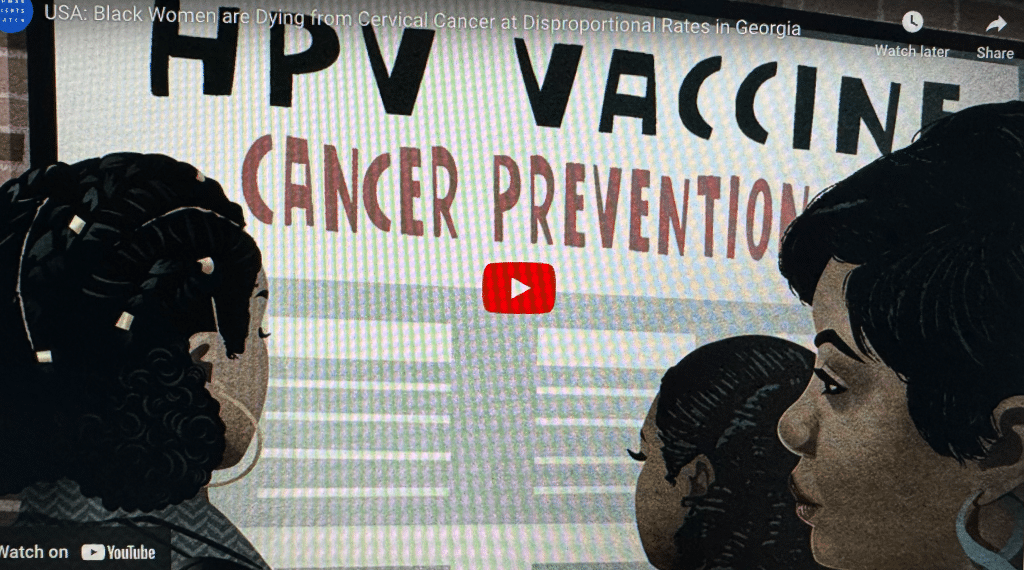
Atlanta – The United States federal and many state and local governments are not doing enough to end cervical cancer deaths, the Southern Rural Black Women’s Initiative for Economic and Social Justice (SRBWI) and Human Rights Watch said in a report today issued during cervical cancer awareness month and focused on the state of Georgia. In 2021, an estimated 4,290 women in the United States died from cervical cancer, including disproportionately high numbers of Black women. Human Rights Watch first reported on the issue three years ago, with a focus on Alabama.

SRBWI Board Member and Author Sophia Bracy Harris recounts segregation at Alabama High School Read More »

Press Release

Atlanta – The United States federal and many state and local governments are not doing enough to end cervical cancer deaths, the Southern Rural Black Women’s Initiative for Economic and Social Justice (SRBWI) and Human Rights Watch said in a report today issued during cervical cancer awareness month and focused on the state of Georgia. In 2021, an estimated 4,290 women in the United States died from cervical cancer, including disproportionately high numbers of Black women. Human Rights Watch first reported on the issue three years ago, with a focus on Alabama.

Press Release Read More »

In Case You Missed It (ICYMI) PBS Special: America ReFramed -Fannie Lou Hamer’s America

Atlanta – The United States federal and many state and local governments are not doing enough to end cervical cancer deaths, the Southern Rural Black Women’s Initiative for Economic and Social Justice (SRBWI) and Human Rights Watch said in a report today issued during cervical cancer awareness month and focused on the state of Georgia. In 2021, an estimated 4,290 women in the United States died from cervical cancer, including disproportionately high numbers of Black women. Human Rights Watch first reported on the issue three years ago, with a focus on Alabama.

In Case You Missed It (ICYMI) PBS Special: America ReFramed -Fannie Lou Hamer’s America Read More »

Congratulations Mississippi HRC Lead Barbara Brooks

Atlanta – The United States federal and many state and local governments are not doing enough to end cervical cancer deaths, the Southern Rural Black Women’s Initiative for Economic and Social Justice (SRBWI) and Human Rights Watch said in a report today issued during cervical cancer awareness month and focused on the state of Georgia. In 2021, an estimated 4,290 women in the United States died from cervical cancer, including disproportionately high numbers of Black women. Human Rights Watch first reported on the issue three years ago, with a focus on Alabama.

Congratulations Mississippi HRC Lead Barbara Brooks Read More »

Cervical Cancer Disproportionally Kills Black Women

Atlanta – The United States federal and many state and local governments are not doing enough to end cervical cancer deaths, the Southern Rural Black Women’s Initiative for Economic and Social Justice (SRBWI) and Human Rights Watch said in a report today issued during cervical cancer awareness month and focused on the state of Georgia. In 2021, an estimated 4,290 women in the United States died from cervical cancer, including disproportionately high numbers of Black women. Human Rights Watch first reported on the issue three years ago, with a focus on Alabama.

Cervical Cancer Disproportionally Kills Black Women Read More »

“We Need Access”: Ending Preventable Deaths from Cervical Cancer in Rural Georgia

This groundbreaking report, “We Need Access,” is based on interviews by SRBWI, Human Rights Watch, and nine community-based researchers with Black women living in three rural counties (Baker, Coffee, and Wilcox) in Georgia. The research has found that Georgia state and US federal policies neglect the reproductive healthcare needs of Black women and contribute to an environment in which they are dying of cervical cancer, a highly preventable disease, at disproportionate rates.

“We Need Access”: Ending Preventable Deaths from Cervical Cancer in Rural Georgia Read More »

In These Times

Noam Chomsky isn’t just a lifelong reader of In These Times — he was also one
of our very first donors. In fact, he made his first donation to In These Times in
1975, a year before the inaugural issue was published.
For Noam Chomsky and our other founding sponsors—including Julian
Bond, Barbara Ehrenreich, Daniel Ellsberg, Michael Harrington, David DuBois,
Naomi Weisstein and many others—the mission of In These Times was critical.
They saw the need for an independent publication to inform and critically analyze
the emerging new movements on the American left. They also understood the
ways in which corporate media too often ignores or misrepresents progressive
causes—leaving too many important voices unheard.

In These Times Read More »